Designing the experience for Lumus — a platform where kids find tutors, attend lessons, and submit homework, all in one place.
Designing the experience for Lumus — a platform where kids find tutors, attend lessons, and submit homework, all in one place.

Role
Role
Product Designer
Product Designer
Time
Time
3 months
3 months
Industry
Industry
EdTech
EdTech
Why Lumus exists?
Why Lumus exists?
The core problem:
The core problem:
parents waste time, money, and trust on tutors who don't click with their child.
parents waste time, money, and trust on tutors who don't click with their child.
Lumus solves this by making the relationship — not the resume — the foundation of the match.
Lumus solves this by making the relationship — not the resume — the foundation of the match.
Modern education has a humanity problem. Despite the explosion of EdTech platforms, learning has become more stressful, not less .
The market is flooded with tutors, yet finding someone who genuinely clicks with a student has never felt harder.
Modern education has a humanity problem. Despite the explosion of EdTech platforms, learning has become more stressful, not less .
The market is flooded with tutors, yet finding someone who genuinely clicks with a student has never felt harder.
A platform built around connection, not credentials

How I tackle the problem
How I tackle the problem
Working as a solo growth designer, I built our core design processes from the ground up
Working as a solo growth designer, I built our core design processes from the ground up
Step #1 Where every good design begins
Step #1 Where every good design begins
I listened in silence — hundreds of comments, dozens of parent groups, real frustrations shared without a filter.
I listened in silence — hundreds of comments, dozens of parent groups, real frustrations shared without a filter.
9/10
9/10
students feel stressed about studying
57%
57%
of parents suffer burnout from academic pressure

Then I pulled up a chair and started asking questions directly, sitting down with mothers who know this struggle firsthand.
Step#2 User interviews — hearing the real story
Behind every insight: a real mother, a real child, a real struggle





4 interviews conducted — 4 mothers, children aged 8–17
“I wish there was an app for tutors similar to “ZnanyLekarz”, I want to see detailed profiles and real reviews before making a choice."
Anastasia, mom 17 years old
“Interactive lesson elements are really important to me—like games and visuals that actually keep my child engaged”
Kasia, mom of a 9-year-old
“I just want an easy login process and a quick way to save my favorite teachers so I can find them instantly”
Marta, mom of 9 years old
“I really value having a clear structure in less ons, but I also need feedback from the teacher so I can actually see how my child is progressing”
Anastasia, mom of 8 years old
“I wish there was an app for tutors similar to “ZnanyLekarz”, I want to see detailed profiles and real reviews before making a choice."
Anastasia, mom 17 years old
“Interactive lesson elements are really important to me—like games and visuals that actually keep my child engaged”
Kasia, mom of a 9-year-old
“I just want an easy login process and a quick way to save my favorite teachers so I can find them instantly”
Marta, mom of 9 years old
“I really value having a clear structure in less ons, but I also need feedback from the teacher so I can actually see how my child is progressing”
Anastasia, mom of 8 years old


Parents struggle to find, evaluate, and consistently work with quality online tutors through a platform that is easy to use, reliable, and keeps them informed about their child's progress.
Step#3 What the market offers — and what it doesn't
Step#3 What the market offers — and what it doesn't
Through these steps, I identified what truly matters to families. The next question was: what does the market offer them? I took a close look at the most popular tutoring platforms — mapping what works, what doesn't, and what's still missing.


By analyzing existing platforms, I identified the features that genuinely work for families — from free trial lessons and interactive classrooms to reward systems, teacher ratings, and smart filters — and used these as the foundation for Lumus.
The competitive analysis revealed a set of features worth carrying forward:
Free first lesson to lower the entry barrier
Level assessment with questions about the child's interests
Interactive classroom with engaging icons
Teacher ratings across progress, support, clarity, and preparation
Lesson duration options (30 or 50 minutes)
Filters for finding the right tutor
Reward system to keep children motivated
Step#4 Wireframes — mapping the experience
It was a breath of fresh air. With Figma Make, I wrote a prompt, plugged in my sitemap, and the wireframes came together almost instantly — saving me what would have been several days of manual work

Step#5 Visual concept — finding the soul of Lumus
It was the most creatively restless part of the journey. I needed the app to feel effortless for parents and exciting for children — at the same time. Sketch after sketch, concept after concept, something was always off.


Lumi isn't just a face for the brand — he's alive within it. A shapeshifting companion who adapts to every subject, he reminds kids that learning isn't one-size-fits-all. Every tap brings a new version of him, and a new reason to keep going.
Each subject gets its own card — icon, label, and a radio button. Simple hierarchy, zero confusion
The single tap to choose. The filled radio button gives instant visual feedback — clear, satisfying, and frictionless
The card style is consistent throughout — a quiet design system doing its job invisibly, keeping the experience cohesive.
A thin progress bar at the top quietly tracks the onboarding journey — no pressure, just gentle guidance forward.
Lumi isn't just a face for the brand — he's alive within it. A shapeshifting companion who adapts to every subject, he reminds kids that learning isn't one-size-fits-all. Every tap brings a new version of him, and a new reason to keep going.
The card style is consistent throughout — a quiet design system doing its job invisibly, keeping the experience cohesive.
The single tap to choose. The filled radio button gives instant visual feedback — clear, satisfying, and frictionless
And then, almost out of nowhere, it all came together.
Deep violet as the foundation — because learning is serious, but it doesn't have to be cold. #3500B 0 hits that balance: bold, warm, and full of energy. The kind of color that makes you feel like something important is about to happen.
A thin progress bar at the top quietly tracks the onboarding journey — no pressure, just gentle guidance forward.
The single tap to choose. The filled radio button gives instant visual feedback — clear, satisfying, and frictionless
The card style is consistent throughout — a quiet design system doing its job invisibly, keeping the experience cohesive.
Lumi isn't just a face for the brand — he's alive within it. A shapeshifting companion who adapts to every subject, he reminds kids that learning isn't one-size-fits-all. Every tap brings a new version of him, and a new reason to keep going.
Each subject gets its own card — icon, label, and a radio button. Simple hierarchy, zero confusion
Step#6 From structure to soul
And this is where the real magic happened. Screen by screen, the world of Lumus took shape.

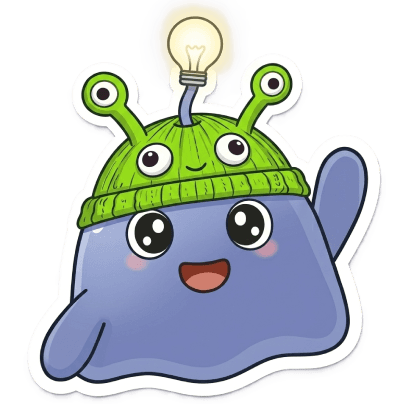
I brought to life nearly 30 Lumics — expressive little characters designed to make children smile, stay curious, and feel something with every tap.
Onboarding


Focus area



Subject


Interest





Match





Functional states



Lumus Lab




The UI became more than visuals: it became a language — one that speaks directly to a child's sense of wonder while giving parents the clarity and trust they need.

The UI tells the story — but these five features are what make Lumus different. Each one came directly from what I heard in interviews, read in parent communities, and saw missing in every platform I analyzed.
Step#2 User interviews — hearing the real story
Behind every insight: a real mother, a real child, a real struggle
4 interviews conducted — 4 mothers, children aged 8–17
“I wish there was an app for tutors similar to “ZnanyLekarz”, I want to see detailed profiles and real reviews before making a choice."
Anastasia, mom 17 years old
“I just want an easy login process and a quick way to save my favorite teachers so I can find them instantly”
Marta, mom of 9 years old
“Interactive lesson elements are really important to me—like games and visuals that actually keep my child engaged”
Kasia, mom of a 9-year-old
“I really value having a clear structure in less ons, but I also need feedback from the teacher so I can actually see how my child is progressing”
Anastasia, mom of 8 years old
Parents struggle to find, evaluate, and consistently work with quality online tutors through a platform that is easy to use, reliable, and keeps them informed about their child's progress.
Step#3 What the market offers — and what it doesn't
Through these steps, I identified what truly matters to families. The next question was: what does the market offer them? I took a close look at the most popular tutoring platforms — mapping what works, what doesn't, and what's still missing.
By analyzing existing platforms, I identified the features that genuinely work for families — from free trial lessons and interactive classrooms to reward systems, teacher ratings, and smart filters — and used these as the foundation for Lumus.
The competitive analysis revealed a set of features worth carrying forward:
Free first lesson to lower the entry barrier
Level assessment with questions about the child's interests
Interactive classroom with engaging icons
Teacher ratings across progress, support, clarity, and preparation
Lesson duration options (30 or 50 minutes)
Filters for finding the right tutor
Reward system to keep children motivated
Step#4 Wireframes — mapping the experience
It was a breath of fresh air. With Figma Make, I wrote a prompt, plugged in my sitemap, and the wireframes came together almost instantly — saving me what would have been several days of manual work
A thin progress bar at the top quietly tracks the onboarding journey — no pressure, just gentle guidance forward.
Lumi shapeshifts with every subject — a living reminder that learning isn't one-size-fits-all.
The card style is consistent throughout — a quiet design system doing its job invisibly, keeping the experience cohesive.
The single tap to choose. The filled radio button gives instant visual feedback — clear, satisfying, and frictionless
Each subject gets its own card — icon, label, and a radio button. Simple hierarchy, zero confusion
Step#5 Visual concept — finding the soul of Lumus
It was the most creatively restless part of the journey. I needed the app to feel effortless for parents and exciting for children — at the same time. Sketch after sketch, concept after concept, something was always off.
And then, almost out of nowhere, it all came together.
Deep violet as the foundation — because learning is serious, but it doesn't have to be cold. #3500B 0 hits that balance: bold, warm, and full of energy. The kind of color that makes you feel like something important is about to happen.
Pre-test topic explanation

Before a test or exam, students can request a quick explanation of a specific topic. No full lesson required — just the thing they need, when they need it.
Because sometimes 20 minutes before a test is worth more than an hour the week before
Personalized onboarding & tutor match
Finding the right tutor isn't about credentials — it's about fit. During onboarding, students answer questions about their temperament, interests, subject, and goal: improving grades, preparing for ZNO/Matura, or deepening knowledge. The system then suggests tutors who match not just academically, but personally
The match happens before the first lesson —
not after three disappointing ones

Homework check in 30 minutes
Twice a week, students can submit their school homework directly on the platform. Any available tutor picks it up and responds within 30 minutes — no need to book a full lesson, no waiting until the next session.
Help when it's actually needed — not when it's scheduled.

Smart calendar

Tests, exams, and independent tasks can be added directly to the in-app calendar. Reminders keep students on track — and parents in the loop — without extra apps or messages.
The calendar remembers — so you don't have to
Lumik & Lumus Lab
Instead of generic progress bars, Lumus rewards learning through Lumik — the app's mascot. Students collect points and unlock custom Lumik styles in a dedicated Lumus Lab screen. Progress feels personal, not mechanical.
Progress bars were removed entirely. What remained was more fun — and more meaningful.

Lumik & Lumus Lab
Instead of generic progress bars, Lumus rewards learning through Lumik — the app's mascot. Students collect points and unlock custom Lumik styles in a dedicated Lumus Lab screen. Progress feels personal, not mechanical.
Progress bars were removed entirely. What remained was more fun — and more meaningful.
Personalized onboarding & tutor match
Finding the right tutor isn't about credentials — it's about fit. During onboarding, students answer questions about their temperament, interests, subject, and goal: improving grades, preparing for ZNO/Matura, or deepening knowledge. The system then suggests tutors who match not just academically, but personally
The match happens before the first lesson —
not after three disappointing ones
Homework check in 30 minutes
Twice a week, students can submit their school homework directly on the platform. Any available tutor picks it up and responds within 30 minutes — no need to book a full lesson, no waiting until the next session.
Help when it's actually needed — not when it's scheduled.
Pre-test topic explanation
Before a test or exam, students can request a quick explanation of a specific topic. No full lesson required — just the thing they need, when they need it.
Because sometimes 20 minutes before a test is worth more than an hour the week before
Smart calendar
Tests, exams, and independent tasks can be added directly to the in-app calendar. Reminders keep students on track — and parents in the loop — without extra apps or messages.
The calendar remembers — so you don't have to
Lumik & Lumus Lab
Instead of generic progress bars, Lumus rewards learning through Lumik — the app's mascot. Students collect points and unlock custom Lumik styles in a dedicated Lumus Lab screen. Progress feels personal, not mechanical.
Progress bars were removed entirely. What remained was more fun — and more meaningful.
Unmoderated usability testing
Unmoderated usability testing
I conducted unmoderated usability testing with 10 participants — the same mothers I had interviewed earlier, all raising children aged 6–17. Additionally, I spoke informally with a few more mothers who had never tried online tutoring at all — no recordings, no structured sessions, just honest conversations. Their reason was simple: fear. Fear of not knowing where to look, fear of making the wrong choice, fear of wasting money on someone who wouldn't be right for their child. Their voices didn't make it into the data — but they shaped the thinking behind every decision in Lumus.
7 tasks tested
10 participants
40% completion rate

This would genuinely make my life easier."
"I loved being able to choose a focus area — it felt like it was built for my child specifically.
-Paula
The drop-off wasn't a product failure — it was a reminder that testing with real, busy parents requires clearer instructions and ideally a moderated session next time.
What I learned from Lumus
01
Research changes everything
I thought I understood the problem — but it was only after talking to real mothers that I realized the true barrier wasn't the absence of a platform. It was fear and a lack of trust. Without research, I would have built the wrong thing.
02
Designing for emotion, not just function
Lumus taught me that for a children's product, being easy to use isn't enough — it has to feel joyful. Every Lumik, every interaction, every word on the screen is an emotional decision, not just a design one.
03
Testing with real people is humbling
60% didn't complete the usability test — and that was uncomfortable to see. But it taught me that real users live in chaos, and a product has to be designed with that in mind.
04
Solo doesn't mean without feedback
I worked independently — but mentors, mothers, and even the children around me shaped every decision I made. Design is never truly solo.
05
Simplicity is the hardest thing to design
The hardest part wasn't adding a feature — it was deciding what not to add. Every unnecessary step in onboarding is a potential dropout.
More works
Kacperkowo
Kacperkowo
Website redesign for a private kindergarten
Website redesign for a private kindergarten
Web Design
Web Design
Redesign
Redesign
End-to-end design
End-to-end design

GreenThumbHub
GreenThumbHub
Web platform for garden planning, plant tracking
and gardening advice
Web platform for garden planning, plant tracking
and gardening advice
Web Design
Web Design
GreenTech
GreenTech
End-to-end design

Ideas, internships, collaborations?
Let's talk!

Ideas,
internships, collaborations?
Let's talk!
Ideas, internships, collaborations?
Let's talk!
Step#6 From structure to soul
And this is where the real magic happened. Screen by screen, the world of Lumus took shape.
I brought to life nearly 30 Lumics — expressive little characters designed to make children smile, stay curious, and feel something with every tap.
Onboarding
Focus area
Subject
Interest
Match
Functional states
Lumus Lab
The UI became more than visuals: it became a language — one that speaks directly to a child's sense of wonder while giving parents the clarity and trust they need.
The UI tells the story — but these five features are what make Lumus different. Each one came directly from what I heard in interviews, read in parent communities, and saw missing in every platform I analyzed.
What I learned from Lumus
01
Research changes everything
I thought I understood the problem — but it was only after talking to real mothers that I realized the true barrier wasn't the absence of a platform. It was fear and a lack of trust. Without research, I would have built the wrong thing.
02
Designing for emotion, not just function
Lumus taught me that for a children's product, being easy to use isn't enough — it has to feel joyful. Every Lumik, every interaction, every word on the screen is an emotional decision, not just a design one.
03
Testing with real people is humbling
60% didn't complete the usability test — and that was uncomfortable to see. But it taught me that real users live in chaos, and a product has to be designed with that in mind.
04
Solo doesn't mean without feedback
I worked independently — but mentors, mothers, and even the children around me shaped every decision I made. Design is never truly solo.
05
Simplicity is the hardest thing to design
The hardest part wasn't adding a feature — it was deciding what not to add. Every unnecessary step in onboarding is a potential dropout.
Pre-test topic explanation
Before a test or exam, students can request a quick explanation of a specific topic. No full lesson required — just the thing they need, when they need it.
Because sometimes 20 minutes before a test is worth more than an hour the week before
Personalized onboarding & tutor match
Finding the right tutor isn't about credentials — it's about fit. During onboarding, students answer questions about their temperament, interests, subject, and goal: improving grades, preparing for ZNO/Matura, or deepening knowledge. The system then suggests tutors who match not just academically, but personally
The match happens before the first lesson —not after three disappointing ones
Homework check in 30 minutes
Twice a week, students can submit their school homework directly on the platform. Any available tutor picks it up and responds within 30 minutes — no need to book a full lesson, no waiting until the next session.
Help when it's actually needed — not when it's scheduled.
Smart calendar
Tests, exams, and independent tasks can be added directly to the in-app calendar. Reminders keep students on track — and parents in the loop — without extra apps or messages.
The calendar remembers — so you don't have to
Lumik & Lumus Lab
Instead of generic progress bars, Lumus rewards learning through Lumik — the app's mascot. Students collect points and unlock custom Lumik styles in a dedicated Lumus Lab screen. Progress feels personal, not mechanical.
Progress bars were removed entirely. What remained was more fun — and more meaningful.
Unmoderated usability testing
I conducted unmoderated usability testing with 10 participants — the same mothers I had interviewed earlier, all raising children aged 6–17. Additionally, I spoke informally with a few more mothers who had never tried online tutoring at all — no recordings, no structured sessions, just honest conversations. Their reason was simple: fear. Fear of not knowing where to look, fear of making the wrong choice, fear of wasting money on someone who wouldn't be right for their child. Their voices didn't make it into the data — but they shaped the thinking behind every decision in Lumus.
7 tasks tested
10 participants
40% completion rate
This would genuinely make my life easier."
"I loved being able to choose a focus area — it felt like it was built for my child specifically.
-Paula
The drop-off wasn't a product failure — it was a reminder that testing with real, busy parents requires clearer instructions and ideally a moderated session next time.